
High Water Ahead: Preparing Your Dock for Upcoming King Tides
Updated November 16, 2026
In our last update, we expressed hope that water levels above tide-table predictions were beginning to ease. THAT HAS NOT HAPPENNED! Based on continued local observations, homeowners should remain watchful and prepare for the next period of even higher tides.
Our most immediate priorities are checking the distance between dock guides and piling caps and keeping the area beneath every ramp clear.
Dates to watch
NOAA identifies November 22–27 as an upcoming period of above-normal astronomical high tides. The California Coastal Commission’s statewide King Tides dates are November 24–26. These dates overlap Thanksgiving, so homeowners traveling for the holiday should arrange for someone to monitor their docks.
Why the water can rise above tide-table predictions
Tide tables describe the predictable astronomical tide. They do not include all the effects of changing ocean and weather conditions.
NOAA reports that El Niño-related Kelvin waves and unusually warm ocean water have contributed to elevated coastal water levels this fall. Wind, atmospheric pressure, and storms can also make observed water levels differ from predictions. The additional height varies; it should not be treated as a fixed amount to add to every tide prediction.
The Harbor Director’s November report describes local readings of approximately 7.7 feet on October 26 and more than 8 feet the following day, even without a major storm or significant wave activity. Those observations reinforce the need to watch conditions at your own dock.
What homeowners should check
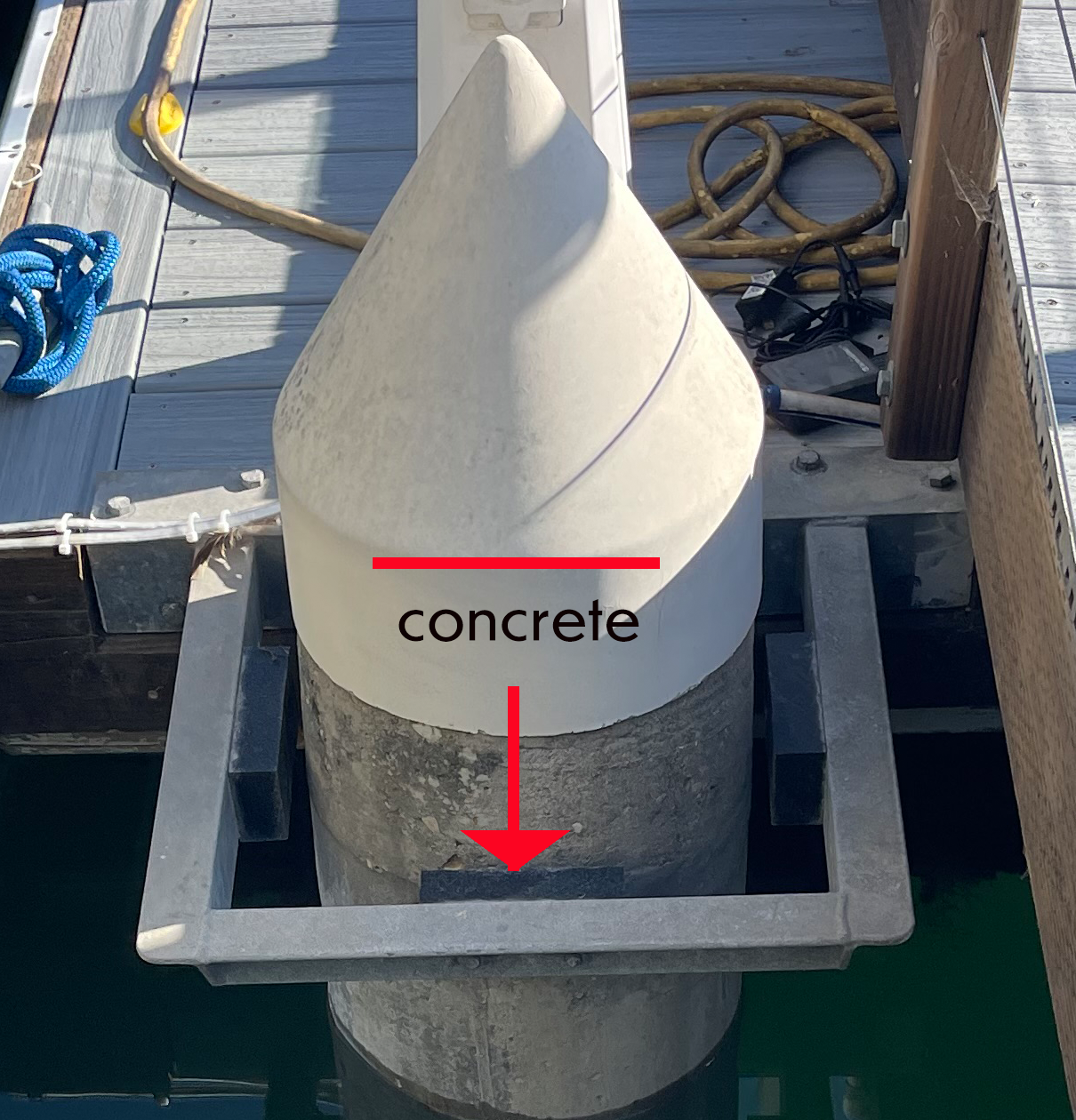
Piling-cap clearance: Observe how close your dock’s rollers or piling guides come to the caps as water rises. If they approach or contact the caps, or the dock appears restricted, contact a qualified dock contractor. Do not remove caps or alter guides without professional advice.
Clear space beneath the ramp: Remove stored items and anything else that could obstruct movement. The ramp needs room to move as the dock rises and falls, including during the low tides that follow the highs.
Lines, hoses, and electrical cords: Check that they can accommodate changing dock and boat positions without becoming taut, snagged, or pinched. Keep electrical connections out of the water.
Holiday coverage: If you will be away, arrange for a neighbor, dock user, or service provider to check conditions and have your contact information available.
Make these checks before high water arrives. If a dock or ramp is binding, damaged, or moving unusually, stay off it and seek professional assistance.
What you should NOT DO
DO NOT weld anything over the hinge at the top of the ramp. This could end up severely damaging the seawall,
DO NOT place uneven weights on the dock – keep it flat,
DO NOT place anything under your ramp that can be crushed.
What you could do…
In the event you are on your dock and the tide is rising and you fear the rollers will go over the top of the pylon.
Make sure you have boat hooks or poles on hand – to put in the corners of the brace that holds the rollers surrounding the pylon guide it back down as the tide goes out.
Harbor entrance conditions are a separate concern
Reports of waves washing over the ocean breakwater refer to structures at the harbor entrance—not the residential seawalls in Mandalay Bay.
Boaters should check current marine forecasts before departure. Conditions at a sheltered residential dock do not establish whether the harbor entrance is safe.
Where to check conditions
- November Tide Calendar for Channel Islands Beach From Tidetime.org
- Channel Islands Harbor ocean conditions — marine forecast information.
- NOAA Coastal Inundation Dashboard — regional water-level observations and available forecasts.
- National Weather Service Los Angeles/Oxnard — current weather and coastal alerts.
- California King Tides Project — King Tides dates and information.
Use tide predictions to plan, and actual conditions at your dock to guide precautions.
If your dock is approaching the piling caps
Contact your dock contractor promptly. Ask whether temporarily adding water-filled trash cans or watertight bins would be appropriate for your dock’s flotation, condition, and load capacity.
Water adds substantial weight: 50 U.S. gallons weighs approximately 417 pounds, plus the container. Only use this approach with your contractor’s guidance. Secure containers against shifting and distribute the weight as directed so the dock remains level. Keep ramps and walking areas clear.
Watch your boat’s dock lines and adjust as needed to accommodate changing water levels and the dock’s position.
Talk to your neighbors!
Let’s watch out for one another. If someone will be away, offer to check their dock and make sure you have a way to contact them.
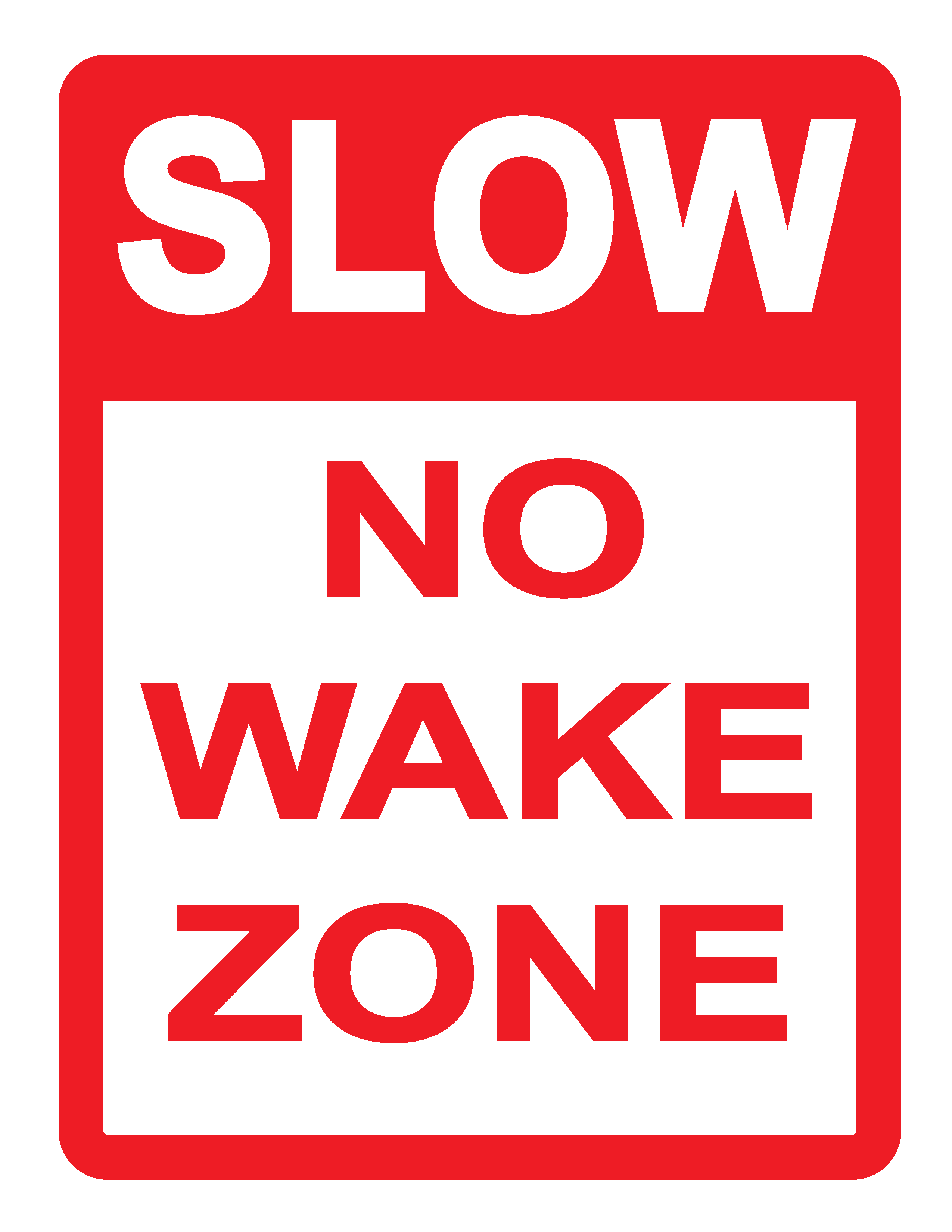
Please observe NO WAKE throughout the harbor!
Even small wakes can strain docks, boats, and pilings. When docks are already close to piling caps, added movement can increase the risk of damage. Please travel slowly and keep your wake to a minimum.
Click the link below to get a pdf NO WAKE ZONE to print and but in boat winders and on docks and railings
CLICK FOR PDF NO WAKE ZONE – NO_WAKE_ZONE_ToPrint
Channel Islands Harbor Tide Schedule (Nov 22–27, 2026)
November tide calendar for Channel Islands Beach
| Date | Early Morning Low | Morning King High | Afternoon Extreme Low | Evening High |
|---|---|---|---|---|
| Sun, Nov 22 | 12:27 AM (1.4 ft) | 6:54 AM (6.0 ft) | 2:00 PM (-0.8 ft) | 8:17 PM (3.6 ft) |
| Mon, Nov 23 | 1:04 AM (1.6 ft) | 7:28 AM (6.4 ft) | 2:44 PM (-1.3 ft) | 9:10 PM (3.6 ft) |
| Tue, Nov 24 | 1:43 AM (1.9 ft) | 8:07 AM (6.7 ft) | 3:31 PM (-1.6 ft) | 10:04 PM (3.6 ft) |
| Wed, Nov 25 | 2:24 AM (2.2 ft) | 8:44 AM (7.1 ft) | 4:13 PM (-1.5 ft) | 10:49 PM (3.7 ft) |
| Thu, Nov 26 | 3:08 AM (2.4 ft) | 9:30 AM (6.9 ft) | 5:05 PM (-1.4 ft) | 11:50 PM (3.7 ft) |
| Fri, Nov 27 | 3:59 AM (2.6 ft) | 10:20 AM (6.6 ft) | 6:01 PM (-1.1 ft) | — |
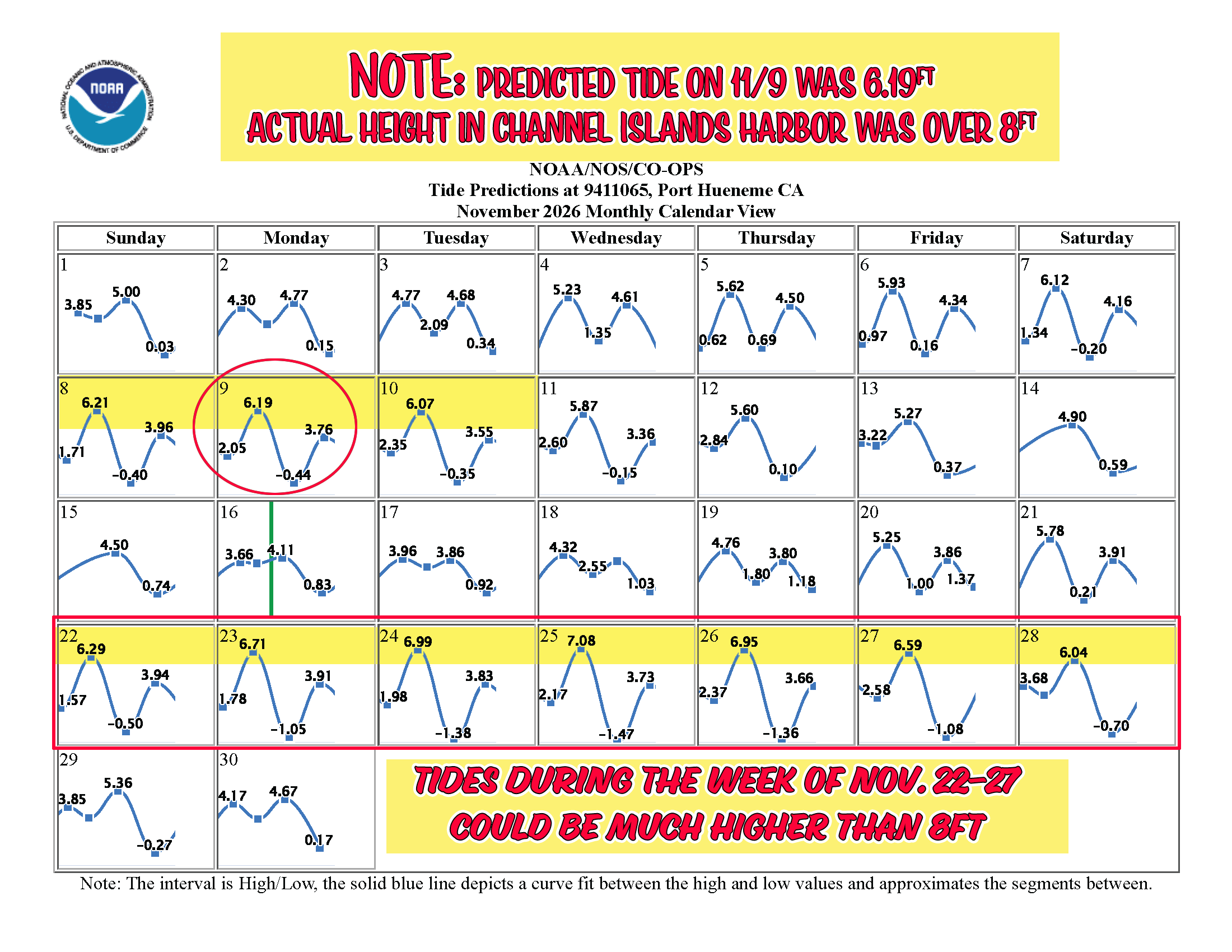
The image above is for NOVEMBER – the King tides will also hit in DECEMBER – we will be watching and send updates!
Below are notes from the October Update that may be useful.
to see the entire October Update click here.
Now is a good time to check your dock.
If your dock’s rollers or piling guides are approaching the caps at high tide, contact a qualified dock contractor to discuss precautions before the next round of king tides.
I realize there may be a wait for dock services!
With that in mind, I’m sharing some temporary measures suggested this morning by a well-known local dock specialist who services docks throughout our area. Every dock is different! Parallel docks to seawalls (=) are more vulnerable to sway than perpendicular (at right angle) docks.
Please contact your dock specialist to confirm that these approaches are appropriate for your dock before attempting them if your dock is in disrepair.
DISCLAIMER: I am offering the following temporary solutions and friendly advice below, that I received from a well know local dock specialist this morning.
Consider contacting your dock specialist to confirm this approach is appropriate for your dock before attempting it.
TEMPORARY MEASURES
One possible temporary measure is adding secured, water-filled containers to lower a floating dock slightly and provide additional clearance below the piling caps. Even adding people could help!
(Woo hoo – literal dock parties!)
Use this approach only after confirming that your dock can safely carry the additional weight. If your dock is in disrepair, please use extreme caution.
Two trash cans filled with water can give you about 4 inches – which could make a big difference!
How much the dock lowers depends on its size and flotation.
PLEASE MAKE SURE TO PLACE WEIGHT IN WAYS TO KEEP DOCKS LEVEL!
Plan to monitor your dock during the highest tides
Check local tide times and coastal advisories, and arrange for someone to keep an eye on it if you will be away.
If a piling cap tips off but the dock’s guide frame still surrounds the concrete piling
If a piling cap tips off but the dock’s guide frame still surrounds the concrete piling: Gentle guidance with pipes or poles, can help keep the frame centered as the tide recedes and allow it to settle back into place.
Have a friend or neighbor act as a spotter. Keep hands and feet clear of pinch points, and do not force the frame.
.If the guide frame has cleared the piling entirely, contact a dock professional promptly.
Our sheltered waterways generally experience less wave action than exposed coastal locations, which may help with monitoring and gentle adjustments. Even so, use caution: docks can shift unexpectedly.